
A useful coverage report answers a question about a specific run.
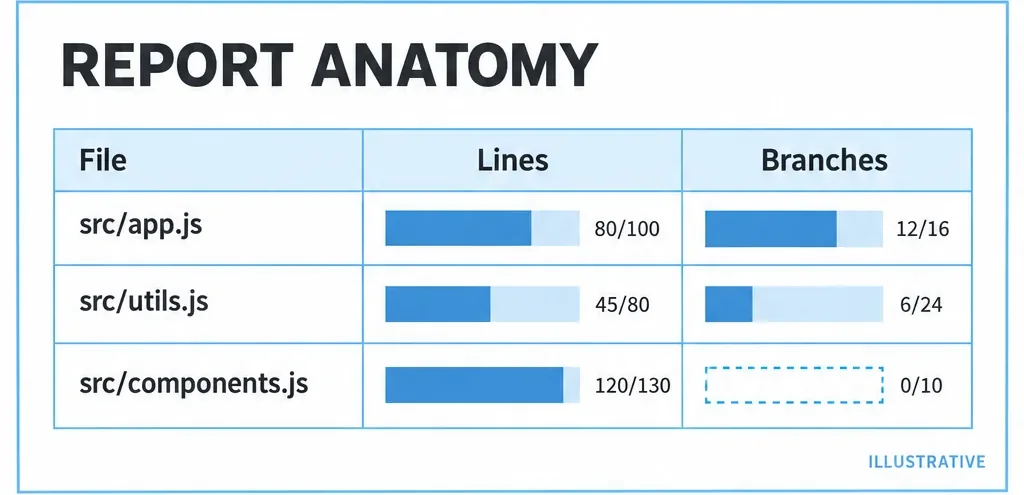
These original field notes connect decisions across runners and build systems. They are explanatory notes from this independent reference, not upstream release announcements.
The percentage starts with the file list
Two reports can show the same percentage while measuring different modules. A setup limited to imported source can omit an unused module entirely. Compare source roots, extensions, include rules, exclusions and providers before comparing results.
Work through source scope, then inspect threshold policy. Reviewers should be able to explain what enters the calculation.
Name the instrumentation owner
A Babel test build can already contain counters. Asking another tool to instrument it again adds a boundary to debug. Identify the owner, persistence mechanism and reporter in the configuration.
The Babel guide separates those jobs. The webpack guide adds the bridge between browser context and host.
A subprocess and a browser need different collection checks
nyc's tree displays Node process relationships. It does not make a Node controller into a browser collector. If a file disappears, identify where it executed before changing output formats.
Use process collection for Node suites and raw coverage objects for an explicit handoff. Start with the Mocha exercise for a small branch example.
Keep upstream information separate
For releases and authoritative instructions, use the official documentation. These notes link to primary sources and distinguish older patterns from current runner behavior.
Primary sources
Check official documentation against the tools installed in your project. These explanations and examples are independent.