
Trace a coverage problem from instrumentation through collection and reporting.
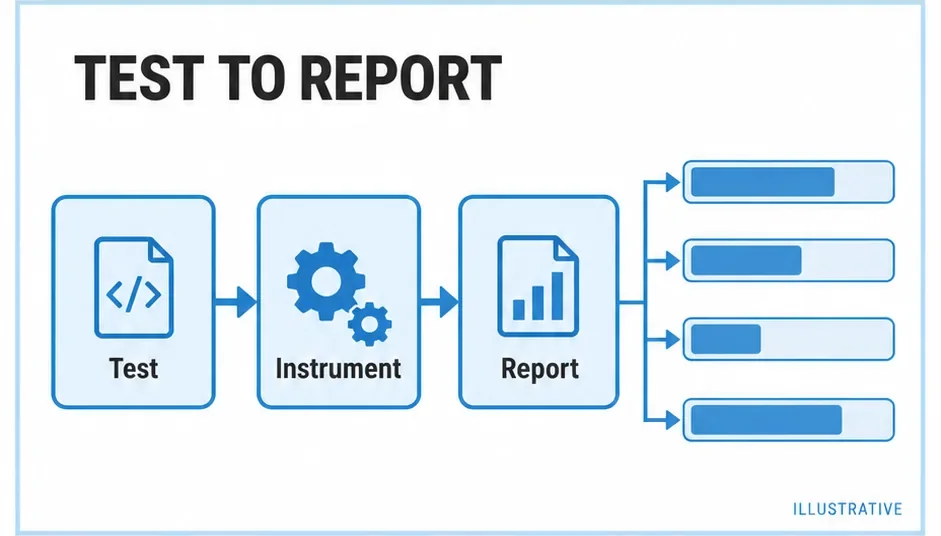
Did the source receive counters? Did the environment save them? Is the reporter reading the same source revision? These guides follow instrumentation, file selection, collection, output and enforcement.
Choose a stage to inspect
- Choose an Istanbul reporter: HTML, LCOV, JSON or text
Compare report formats, regenerate outputs from raw nyc data, and distinguish detailed counters, summaries, display colors and coverage policy.
- Turn an Istanbul coverage object into a report
Persist detailed browser counters, merge Istanbul coverage maps and render them with nyc or the istanbul-lib-report and istanbul-reports APIs.
- Istanbul instrumentation: add counters without double processing
Choose runtime or ahead-of-time instrumentation, use nyc instrument or istanbul-lib-instrument, and separate counter insertion from collection and reporting.
- nyc process trees and merging separate test runs
Inspect Node subprocess collection, preserve data across sequential suites, and distinguish raw-data merging from report generation.
- nyc thresholds and check-coverage: make the gate explicit
Enable nyc coverage checks, choose aggregate or per-file limits, separate colors from enforcement and diagnose CI threshold failures.
- nyc file scope: all, include, exclude and source maps
Define the measured file set, keep untouched source visible, understand exclusion overrides and diagnose coverage lost during source-map remapping.
Use a short diagnostic sequence
Identify the instrumenter or runtime provider. Inspect one raw file and its source path. Render it against the matching checkout. Then check whether policy failure comes from aggregate limits, per-file checks or a changed source set.
Keep raw counters separate from summaries. An aggregate number can describe different file sets, and a summary cannot recover the source locations needed to investigate a branch.
Return to runner configuration when needed
If no usable data exists, start with the tutorials. Jest and tap own their coverage controls. Browsers and devices need a transfer step. The integration guide compares those boundaries before you add another wrapper.
Primary sources
Check official documentation against the tools installed in your project. These explanations and examples are independent.